
























Craps Rules and Odds: How the Table Works and Where the Value Is
The table, the shooter and the come-out roll
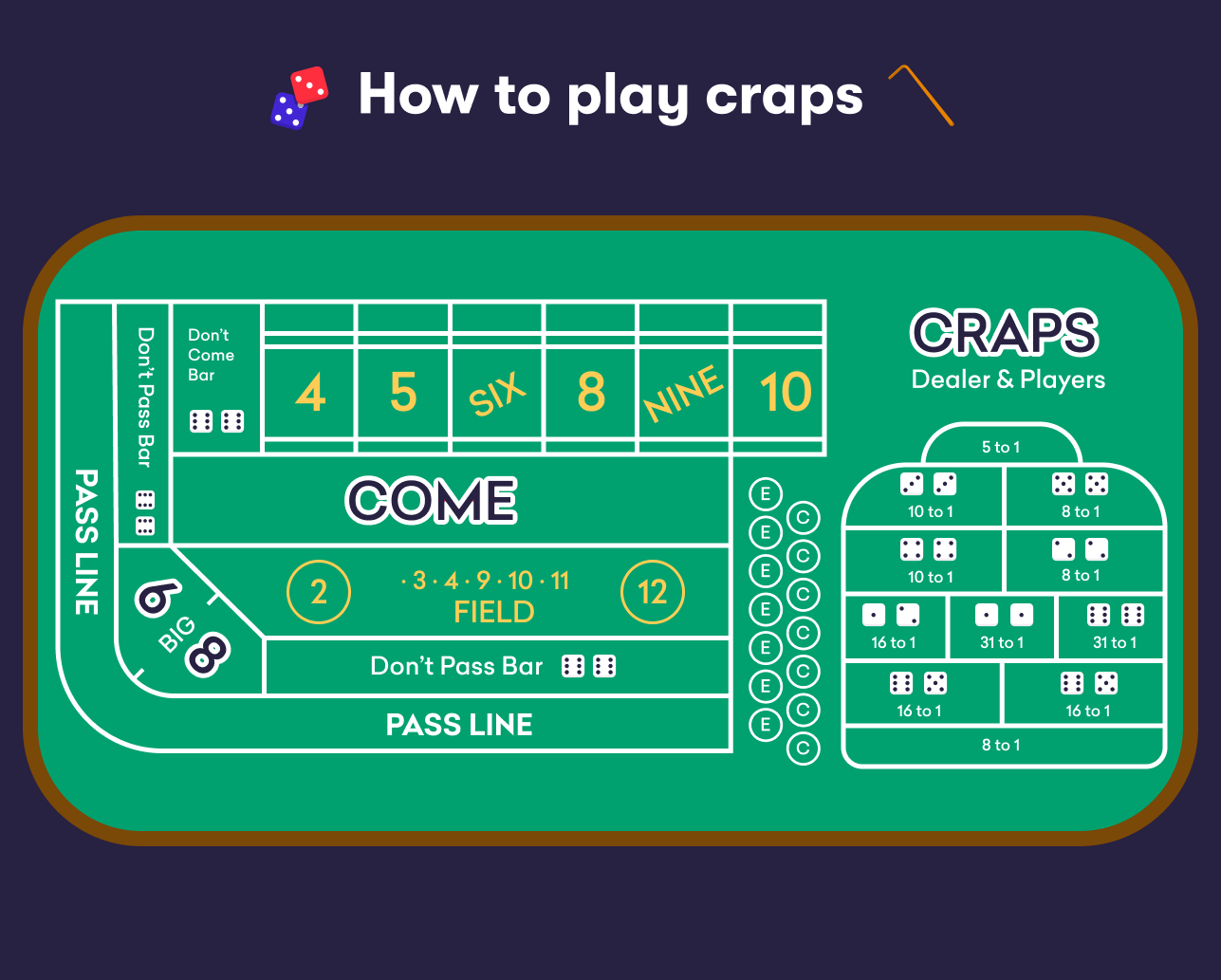
Craps looks chaotic because many bets are settled at once, but the game follows a clear cycle. One player, the shooter, rolls two dice. The first roll of a new cycle is the come-out roll. The layout is divided into areas for line bets, come bets, place bets, field bets and proposition bets, and each area has its own rules and payout structure. You do not have to be the shooter to take part; most players simply wager on the outcome of the shooter’s rolls.
On the come-out roll, some totals settle certain bets immediately, while other totals establish a point. If a point is set, the dealer marks it, and the shooter keeps rolling until either that point repeats or the losing total appears. The point repeating helps the Pass Line and Come bets; the losing total helps the Don’t Pass and Don’t Come side. Understanding this two-stage rhythm is the key to reading the rest of the table.
Pass Line and Don’t Pass: the backbone bets
The Pass Line is the most straightforward wager. You place it before the come-out roll. It wins immediately on the come-out if the shooter rolls one of the winning totals, and it loses immediately if the shooter rolls one of the losing totals. If a point is established instead, the Pass Line bet wins when that point repeats before the losing total appears. It pays even money, which is one reason it is popular with newcomers. The Don’t Pass bet is essentially the opposite: it loses on the immediate winning totals, wins on the immediate losing totals, and after a point is set it wins if the losing total appears before the point repeats.
One detail matters for odds: many tables treat one come-out total differently for the Don’t Pass bet. That house rule slightly changes the mathematics, so the two sides are not perfectly symmetrical. The difference is small, but it is real. The Pass Line and Don’t Pass bets are still usually among the lower-edge wagers on the table, especially when combined with an odds bet.
Come and Don’t Come: keeping the cycle going
The Come bet works like a Pass Line bet, except you place it after a point has already been established. The next roll acts as a come-out for that bet. If it wins or loses immediately, the Come bet is settled. If a new point is created for the Come bet, it wins when that number repeats before the losing total appears. The Don’t Come bet is the opposite side of the same idea. These bets let players have more than one point working at a time, which is why the table can look complicated even when the underlying rules are simple.
The main risk with Come and Don’t Come bets is tracking them. Each bet has its own point and its own resolution, so it is easy to lose sight of what is working. If you prefer a calm, simple session, stick to one line bet and learn how it behaves before adding more.
Odds bets and the difference between true odds and payouts
After a Pass or Come point is established, many casinos allow an Odds bet behind the line. After a Don’t Pass or Don’t Come point, players can often lay odds instead. The Odds bet is special because it is paid at true odds, meaning the payout reflects the actual probability of the outcome rather than including a built-in house margin. That does not make it a guaranteed winner, and it does not change the chance of the underlying line bet winning, but it does improve the overall value of the combination.
The catch is that Odds bets are optional and may be limited by table rules or the amount of your original line bet. They also add variance: a larger Odds bet means a larger swing when the point is resolved. Players who want a lower overall house edge usually take or lay odds when the rules allow, while players who prefer smaller swings may keep the odds bet modest. Always confirm the table’s limits and payout procedure before assuming how an Odds bet will be handled.
Place bets, field bets and proposition bets
Place bets let you wager that a particular point number will repeat before the losing total appears. They can be put up without waiting for a come-out, and they can be taken down or changed between rolls in many casinos, subject to house rules. Place bets are convenient, but their payouts usually carry a higher house edge than the best line bets combined with odds. The exact value depends on which number you place and how the casino pays it.
The Field bet is a one-roll wager on a group of totals. Some totals in the field may pay more than others, and the house edge varies accordingly. Proposition bets are one-roll or multi-roll wagers on specific outcomes, such as particular totals or combinations. They are often the most entertaining bets on the layout, but they generally carry a much higher house edge than Pass, Don’t Pass, Come, Don’t Come or Odds. Hardway bets also tend to be high-edge wagers. Treat these bets as entertainment rather than as a core odds strategy.
Reading the odds and house edge at the table
Odds in craps are about comparing the true probability of an outcome with the payout the casino offers. A fair bet would pay true odds; a casino bet usually pays slightly less, and that difference is the house edge. The best way to judge a craps wager is not by how often it seems to win, but by how much the payout falls short of the true odds over many rolls. Line bets with odds generally sit near the top of the value scale. Place bets, field bets and proposition bets usually sit lower, with some proposition wagers near the bottom.
Table rules can affect the exact numbers, so compare bets within the same game rather than assuming every craps table is identical. Minimum bets, maximum odds, and the treatment of certain come-out totals all matter. Play at a licensed operator or a reputable casino, set a budget, and decide in advance whether you are there for low-edge play or for the thrill of the long shots.
Craps becomes much less intimidating once you separate the game’s rhythm from the quality of each bet. Start with the Pass Line or Don’t Pass, add Come or Don’t Come only when you can track them, and use Odds bets when the table allows. Keep place bets, field bets and proposition bets in perspective: they can be fun, but they are rarely the best value. The rules are simple, and the odds become clearer when you focus on true probability, payout size and house edge rather than on the noise of a busy table.

0 reacties